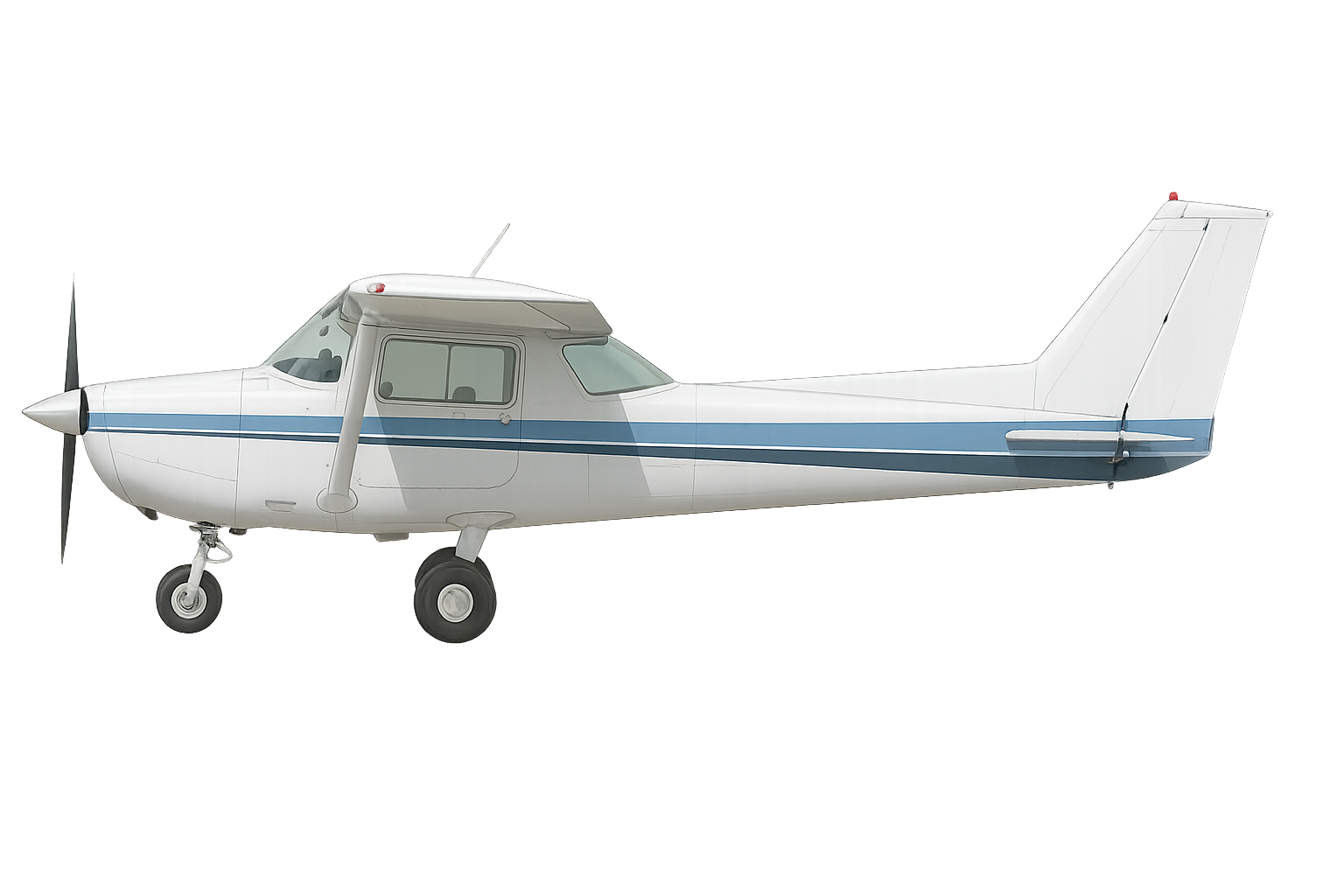
Cessna 150 & 152 Autopilot | Trio Pro Pilot FAA-Certified | TrioAutopilots.com
Cessna 150 and 152 aircraft in flight
Cessna Aircraft  /  150 & 152

Certified Autopilot for the Cessna 150 and 152

The Trio Pro Pilot is FAA-approved for both models under STC SA04230CH. Two-axis GPS autopilot, altitude hold, and approach capability — no EFIS required, no panel rebuild needed.

2-AxisGPS tracking + altitude hold
STCFAA-approved, SA04230CH
14VCompatible with 150/152 electrical
No EFISWorks with portable GPS units
Before You Decide

Has something changed in the way you use your aircraft?

Cessna 150 and 152 owners come to this question from very different starting points. Some have flown the same airplane for years — it started as a local trainer, gradually became a cross-country machine, and the mission has quietly outgrown the original setup. Others are new owners, still learning what the aircraft is capable of and already thinking about what it could become.

Panel configuration ranges just as widely. Some owners are flying with a stock instrument panel and a handheld GPS on a RAM mount. Others have invested in a Garmin G5, Aspen, AV-30, a modern navigator, or a full IFR panel. The upgrade question looks different depending on where you're starting from — but less differently than most people assume.

What tends to change first, regardless of panel, is the mission. Pilots who find themselves flying farther, working toward an instrument rating, carrying a passenger more regularly, or managing more complex airspace start thinking about cockpit workload differently.

Flying farther or more often than originally planned
Working toward an instrument, commercial, or CFI rating
Carrying a passenger and thinking more about workload and safety
Arriving tired after long hand-flown cross-countries

Those are usually not product questions at first. They are flying questions. They often begin as a quiet sense that the airplane is being asked to do more than it did before, or that the pilot is working harder than necessary to complete the same mission.

A local flight around the pattern places one set of demands on a pilot. A three-hour cross-country while managing navigation, weather, radio calls, traffic, and airspace presents another — and hand-flying the entire route compounds that workload throughout.

Has your 150 or 152 become more than a local trainer or weekend airplane?
Are you now flying longer routes where fatigue, workload, and weather decisions matter more than they once did?
If you are building time or working toward ratings, would learning to manage automation make you a more capable pilot?
If conditions deteriorated unexpectedly, would having auto-level or a controlled 180-degree turn option change how you think about safety?
If you could reduce the workload of holding altitude, tracking course, and managing long cruise segments, what would that allow you to do better?

These questions matter because an autopilot is not valuable simply because it has features. It becomes valuable when it helps solve a problem that is becoming important in the way you actually fly.

For one owner, that may be reducing fatigue on longer cross-country flights. For another, it may be learning to manage automation while building instrument or commercial time. For another, it may be creating a safety layer for a spouse, passenger, or family member who flies along. For another, it may be getting more practical value out of a modern GPS or EFIS installation already in the airplane.

How we work through the decision The right answer starts with your aircraft, your panel, your mission, and your budget. Sometimes the answer is to move forward with the Trio Pro Pilot. Sometimes the better first step is to clarify your avionics plan, talk with your installer, or compare upgrade priorities. The goal is not to push a product. The goal is to help you determine whether an autopilot is the upgrade that best solves the problem you are actually trying to solve.
A common assumption worth examining Many owners believe adding a certified autopilot requires upgrading the panel first — an AV-30, Garmin G5, an EFIS, or a new IFR navigator. That assumption often drives a much larger budget decision than the autopilot alone requires. The Trio Pro Pilot can couple to many common portable GPS units through a straightforward connection, providing GPS-guided navigation, altitude hold, and climb and descent management without a panel overhaul or EFIS. Full avionics compatibility and requirements are covered here.
"One of the questions I ask is this: if this were my airplane and I could only make one significant upgrade, which one would provide the greatest improvement in capability, workload reduction, safety, and overall utility?" — Jeff Johnson  |  Instrument-rated pilot  |  N1595R, Trio Pro Pilot installed

For some owners, reducing workload on longer flights is the priority. For others, the focus is instrument training. In that situation, the logic is direct: an autopilot can handle the physical task of maintaining altitude and tracking course, freeing cognitive bandwidth for the procedural and decision-making work that instrument training actually demands. Earning an instrument rating also has meaningful implications for insurance, confidence, and the range of conditions you can manage legally and safely.

The question is not whether someone else thinks you need an autopilot. The question is what needs sound familiar — and if so, what the right solution looks like for your specific aircraft and how you actually fly.

That is why there are two paths on this page. If you already know the Trio Pro Pilot is the right fit for your Cessna 150 or 152, the product and ordering information is available below. If you are still working through the decision, call first. A short conversation can usually identify whether this upgrade fits your aircraft, your flying, and your goals.

Technical Reference

What the Installation Actually Involves

These are the facts that matter before a conversation with an installer. No invented numbers — just what's documented and verified.

Aircraft Coverage
Cessna 150, 150A–M, 152, 152A–B
All major production years
STC
SA04230CH
Held by The STC Group LLC
System Type
Two-axis (roll + pitch)
GPS track, altitude hold, VS climb/descent
Electrical
14V systems
Standard for 150/152 airframes
GPS Requirement
NMEA output required
Many portable units compatible — no panel GPS required
EFIS Required?
No
Who Can Install
Any A&P/IA
No factory-authorized installer required
Estimated Labor
~40 hours, plus or minus 5
Trio alone; more with added equipment. Ask your shop for a quote.
Kit Contents
Complete installation kit
Factory-wired harness, model-specific servo brackets, documentation
Lead Time
Ships in 3–5 weeks
Direct from manufacturer

Equipment pricing and full ordering information at the product page. Questions about your specific configuration: call Jeff at 540-309-6427.

Common Questions

What Cessna 150 and 152 Owners Ask Before Buying

The STC covers the Cessna 150 in all major variants, 150 through 150M, and the 152 and 152A/B. If you're unsure about your specific serial number or year, the AML is available in the documentation center, or call Jeff and he can confirm it directly.
Not necessarily. The Trio Pro Pilot requires a GPS source with compatible output, which many portable GPS units can provide through a simple cable connection. You do not need a panel-mounted IFR GPS, an AV-30, a Garmin G5, or an EFIS to install and use the autopilot. The full avionics compatibility details are on the Why Trio page. If you want to talk through your specific panel before making any decisions, that is exactly what the consultation is for.
Any A&P holding Inspection Authorization, or IA, can complete the installation under the STC. You do not need a factory-authorized shop. Labor typically runs around 40 hours for the Trio alone, though this varies by shop rate and aircraft condition. Equipment pricing is on the product page. Jeff can help scope the full project before you contact an installer so there are no surprises.
For the Cessna 150 and 152, this is a simple question: the Garmin GFC 500 is not currently available for these aircraft. That makes the Trio Pro Pilot especially important for owners who want a certified two-axis autopilot path without moving into a different aircraft or undertaking a much larger modernization project.
Yes, in a specific and practical way. The autopilot handles the physical task of maintaining altitude and tracking course, which frees cognitive bandwidth for the procedural and decision-making work that instrument training actually demands: holding, approaches, intercepts, and workload management. The autopilot does not do the training for you; it removes workload that competes with it. Ask Jeff about the Trio autopilot path to a technically advanced aircraft, or TAA, for commercial training.
Support comes from three directions: Jeff directly by phone or email, The STC Group LLC as the STC holder and technical support source, and a 700+ member Trio Pro Pilot owner community with accumulated real-world installation and operating experience. Documentation, wiring schematics, and the AML are in the Education & Support Center.
Next Steps

Two ways to move forward

Most buyers are either still working through the decision or ready to order. Both paths are straightforward.

Still deciding

Talk through your aircraft first

Jeff reviews your model, current panel, mission, and budget before making any recommendation. The consultation is free and there is no obligation. Most owners leave with a clear answer either way.

Call Jeff — 540-309-6427
Ready to order

View pricing and order the kit

Complete product information, pricing, and ordering for the Cessna 150 and 152 installation kit, including everything that ships with the system.

View Product & Pricing →